
REVISE THE OLD, LEARN THE NEW
Updated: Jul 7, 2025
It was the first time I travelled to Japan – and I am sure it will not be the last.
I could truly relate to the story an Eastern European receptionist in Tokyo told us about how he decided to return as soon as possible during his first visit – and how, just a few years later, he found himself working in Tokyo and speaking Japanese fluently. Compared to him, who is in his twenties, while I am closer to fifty by now, I do not plan to move to Japan. I already pushed my own boundaries when I moved to Germany with my family, and I am still busy pursuing my new identity. But Japan made a deep impression on me – and on my journey to finding that identity.

I have seen a lot and gathered incredible experiences while traveling across continents over the past decades – from Mexico to Australia, from Kenya to India, exploring China as well as Southeast Asia.
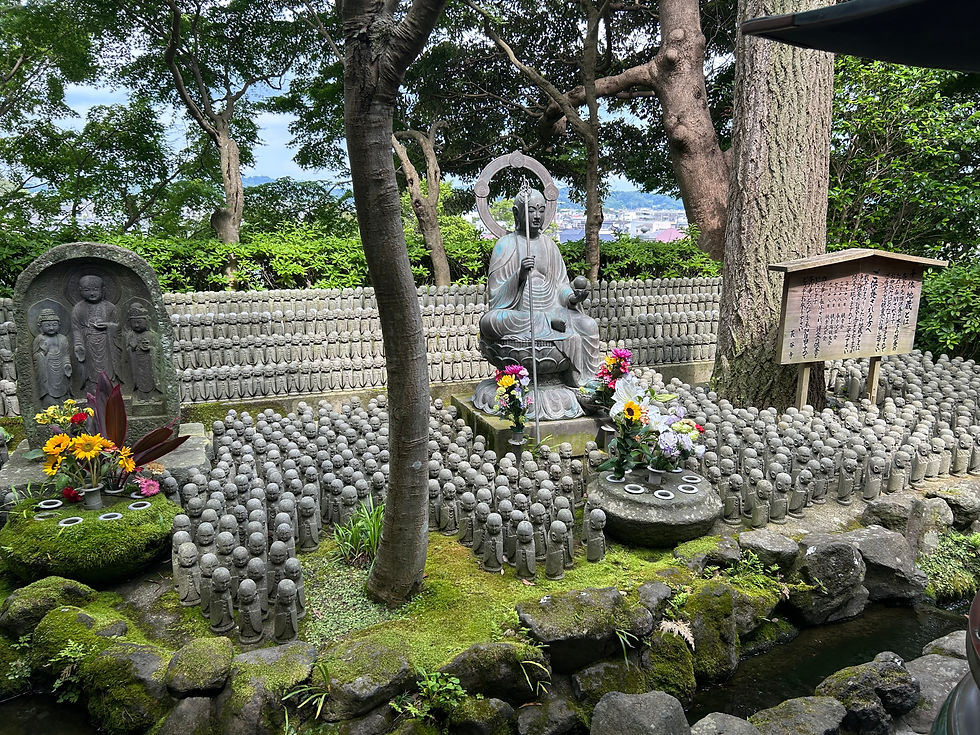
But Japan… Japan is just something completely different. It is far, far away, it is where the sun rises, and also, where it sets. Once you are there, it feels like you have reached the end of the world – but at the same time, as if you have arrived at the beginning of a new one.
It feels like being part of a cycle, you can almost sense the meaning of life hanging in the atmosphere. Every moment is so vivid and intense that you could easily feel overwhelmed and need to take a step back to process it all. I have found only a very few places around the world with such a rich culture, history, religion and nature – but Japan had something more. And it is not just the amazing food, the cutting-edge technology, the exemplary quality, the flashing lights, the super-clean environment, or even the music-playing toilets. It is the power of collectivism, the mutual respect, the humility, and the modesty.
It is magical how millions live together in Japan, mostly in peace. In Tokyo, crowds of people commute daily to work, and yet somehow, everyone makes it onto the subway. Hundreds queue in stores or restaurants for lunch, and still, everyone follows the order. There are no trash bins on the streets, yet not a piece of garbage can be found. What is this intrinsic motivation that drives people to cooperate, follow the rules, and care so deeply about harmony?

One quote, displayed in a hall at the top of Tokyo Tower, stayed with me: “Revise the old, learn the new.” The respect for thousand-year-old traditions, practiced hand in hand with continuous improvement, fascinated me deeply. For them, constant adaptation to change seems as natural as breathing. And my own interpretation is: perfection does not exist, but striving toward it does. And that striving requires lifelong, humble learning and continuous growth.
There are dozens of concepts that express the Japanese cultural and philosophical approach to life. These principles apply to everything from design and work to personal well-being. They offer valuable insights into personal growth, resilience, and a more fulfilling life.
My favourite concepts are:
Ikigai – finding your purpose, your reason for being;
Wabi-sabi – accepting and admiring imperfection;
Kintsugi – embracing flaws and practicing the art of golden repair.

I needed more than two weeks just to digest all that I experienced. I needed time to reflect, to conceptualize, and to reframe. I wanted everything I saw and sensed to find its place among the values and beliefs I had built or inherited throughout my life. And it became clear that Japanese philosophy has a lot to teach me about my expat life too.
I understood that:
Ikigai can help me rediscover my purpose, redefine my values in a new environment, reframe my mission, and reimagine my identity.
Wabi-sabi can teach me to notice the beauty in an imperfect world, reminding me that nothing lasts, nothing is finished, and nothing is perfect, and can guide me to wait patiently while my new identity takes shape.
Kintsugi can invite me to pause, to focus on the present, to acknowledge my fractures and honour my old self, where old scars are golden, and to uncover the unique beauty of my personal story.
Japan did not just give me a new lens to see the world.
It gave me a promise – to meet again.


Comments